Livestock Tank Guidelines:
By Benny Kitten:
Livestock tanks are one of the most frequently installed conservation practices through various programs involving the NRCS, Double El and Agate Conservation Districts.
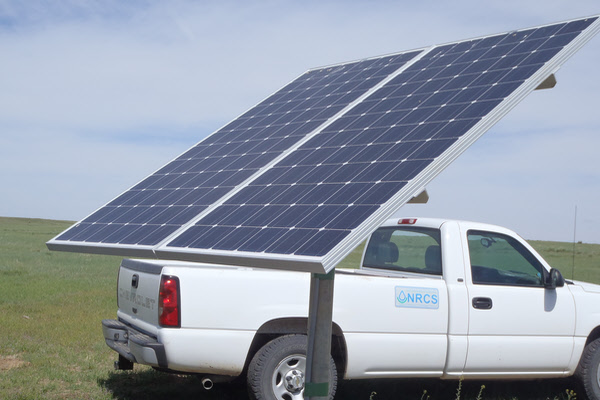
A Livestock Water Tank is usually installed along with a Well, a solar pumping plant, a windmill or a pipeline. The reason there is a possibility to receive assistance to install these practices is to achieve conservation of rangeland. The idea is that we will develop water in a location that has no reliable water, to distribute grazing to an area that is not being utilized to its potential or to facilitate a grazing rotation. The final result should be an improved range management program.
To be eligible for a “watering facility” there must not be water available within 1 mile or by cross fencing for rotational grazing that eliminates access to existing water. To receive reimbursement for a Livestock Water Tank it must be sized and installed according to NRCS Standards and specifications. In addition, there must be a working system to provide water to store. As with all practices, no reimbursement can be made for practices that have been started prior to having approval and a signed contract.
The biggest requirement in determining the size of Livestock Tank you need is the number of animals that will be grazed in that pasture at any one time. The current NRCS requirement is 14 gallons per head per day. When using a solar pumping plant or a windmill the requirement is to store a 4 day supply. If your pumping system is using an electric submersible pump the requirement is less. We recommend a one day supply in this instance.
There are several approved types of Livestock water tanks. These include Steel rim with a concrete bottom, all steel, fiberglass, polyethylene and equipment tire tanks. Each of these types is reimbursable based on the gallons of storage. There are standard drawings available to guide the installation of the tanks mentioned.
The latest preference is to use an equipment tire tank. Generally these are limited to about a 10’ diameter that provides 900 to 1000 gallons of storage. Under solar or a windmill pumped system this would work for approximately 18 head. Many operators choose to use multiple 8 to 10’ tanks to achieve the required storage. There are larger “Cat” track tires that can be installed at larger than 10’ diameters. The larger the diameter of the tank the more effect the wind will have on blowing water over the side and causing muddy areas as well as wasting water. Another way to achieve the required storage is to install a small equipment tire tank along with an above ground enclosed storage tank.
There are several very important specifications that must be followed when installing any type of Livestock water tank. The tank must be within 1” of level, all tanks must have an overflow that outlets at least 20’ from the edge of the tank, the concrete must be a minimum 3000 psi mix, the rebar in concrete bottom tanks must be 12” on center and minimum of #3. A more recent requirement is that tanks must have an animal escape ladder installed. (There is a standard drawing for what is required in an animal escape ladder).
If you have the need to develop a watering system that you believe will meet the existing requirements then you should contact the NRCS or the Conservation District for more information
MARANVILLE FAMILY FARMS
2011/2012 FARMING CONSERVATIONIST OF THE YEAR
Jack and Linda Maranville and family of Matheson, CO were nominated as the Outstanding Farm Conservationist of the Year by Double El Conservation District. The operation consists of 4,600 acres owned, 10,000 acres leased and 2,350 acres custom farmed. Land uses include 10,900 acres of cropland, 3,500 acres pastureland and 200 acres Conservation Reserve Program.
The family operation began in 1946 when the late Wes and Marie Maranville purchased the land. Jack has been farming most of his life on the land owned by his father. He and his wife, Linda joined the family operation full time in 1972. Now their 3 sons and their families (Chad, Cindy and children; Scott, Sarah and children; and Barry and Mandy) are also involved in the operation. Linda does all the bookkeeping; Chad brings his expertise in financial matters and business decisions to the operation; Scott’s primary care is the cow/calf operation. Scott and Sarah also have a cow calf operation on their own; Barry provides his expertise of running the new high tech equipment to the operation.
Conservation practices include: No Till farming that was started in 1978. They perform a wheat/corn or proso millet/summer fallow/wheat rotation. The No till operation has given them the ability to raise corn for grain in this area. “Skip Row” planting for corn (plant 2 rows and skip 2 rows); 30,976 feet of cropland terraces under the old ACP program; Two Continuous CRP tree plantings for 6,714 feet; 500 feet Farmstead Windbreak from the Double El Matching Grants program; Two grassed waterways for 18,679 linear feet (or approximately 3.5 miles) and 2780 cubic yards of earthmoving; 5,511 feet of terraces installed with an EQIP Soil Management contract.
They co-sponsored a Skip Row Planting and Soil Compaction Field Day in 2005: The event was co-Sponsored by Maranville Farms, Monsanto/Dekalb and NRCS Soil Scientist, Mike Peterson. Dr Bob Kline from University of Nebraska was guest speaker.
They were also involved in CSU Wheat Test Plots for approximately 20 years from the early 1970’s until early 1990’s when due to CSU budget cuts the locations were reduced.
The Maranville Family is also very community minded. Jack Maranville served on the Elbert County Farm Service Agency county committee for 9 years and served as chairman for one term. He served on the Colorado Conservation Tillage Association board, serving as president from 2006-2007. He also served on the Colorado Sunflower Association committee for three years. Chad Maranville is currently manager of ProAg Solutions, a fertilizer and chemical company. He has served on the Big Sandy school board for 6 years, serving as president for four years. He also served on the Colorado Wheat Administrative committee for seven years as a representative for Elbert County. Scott Maranville has served on the Elbert County Farm Service Agency county committee for 9 years, serving as chairman for 3 years. He also serves on the board for the local Pikes Peak Coop.
Wilson’s Outstanding Small Acreage Manager
Steve & Joan Wilson of Simla Colorado have been chosen the 2011 Outstanding Small Acreage Managers by Double El Conservation District. They have been planting trees for many years. They previously lived near Ellicott. With guidance from neighbors Ken Davis and Bill McAfee they set a goal to plant 50 trees each year.
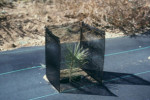
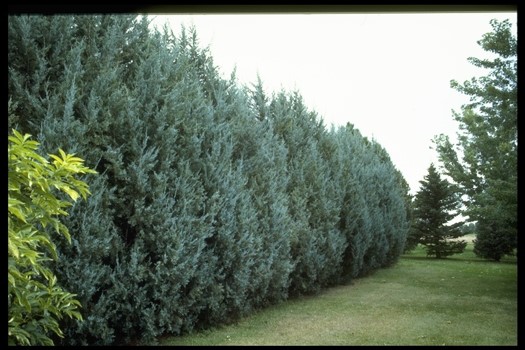
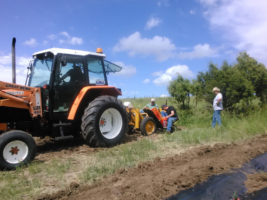
In 2001, they moved to their current residence near Simla, Colorado. In 2002, Double El provided cost share assistance from grant funding to install a windbreak with approximately 450 trees. The planting included seedling trees of Cotoneaster, Rocky Mt Junipers, Ponderosa Pine, Austrian Pine, Lilac and Green Ash. They used polymer, weed barrier fabric, fertilizer tablets and drip irrigation to provide the windbreak with enhanced survival benefits. Benny Kitten of the Simla NRCS helped with their windbreak design and implementation. The windbreak was installed by the late Steve Evanoika of Triple D Tree Service along with his daughter and family, the Roswolds. Steve and Joan installed the drip irrigation system. With their hard work and diligence they have seen about a 98% survival rate. They are convinced the weed barrier fabric and polymer are necessary survival accessories for windbreaks.
Ted Reeves, formerly of Cashel Nurseries, provided the technical advice for their numerous beautiful flower beds and landscaping. Friends Allan and Vicki Moore assisted them in obtaining wood chips from the Black Forest Slash Program for their landscape plantings to conserve moisture.
They utilized soil from their pond cleanout, by neighbor Buddy Johnson, to enhance their sod and flower bed plantings. Friend, Robert Payne hauled in manure for the sod and flower bed plantings.
Steve and Joan thank the Double El for this prestigious honor and assisting them with funding and advice to achieve their mission.
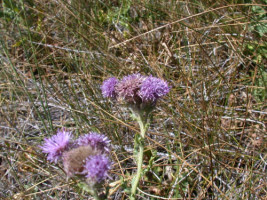
Double El and Agate CDs Weed Grants: Through a partnership with Colo Department of Agriculture, two grant programs were awarded Agate & Double El CDs in the war against noxious weed infestations. The Leafy Spurge Grant provided cost share assistance for noxious weed infestation along the Big Sandy Creek drainage area. 10 landowners participated treating 492 acres of leafy spurge infestations and benefiting about 1,300 acres. The Knapweed Grant provided cost share assistance for noxious weed infestations along Wilson/Bland Creek drainage areas. 3 landowners participated treating 388 acres of spotted and diffuse knapweed infestations and benefiting about 3600 acres. In addition the partnership provided insects for biological control in these two project areas as follows.: 3,200 larinus minutus, lesser knapweed flower weevil and 100 cyphocleonus achates, knapweed root weevil, and 8,000 insects included a mixture of A flave, A nigriscutis, A czwalinae and A lacertosa for leafy spurge plants. The chemical treatments along with the biological control are accomplishing good control although the biological can take up to 5 years to achieve optimum results.
Lori Ellefson New District
Conservation Technician
Lori Ellefson is the new conservation technician at the Simla Service Center. She previously worked for Area Surveying and El Paso County. At Area Surveying she learned about land surveying and computer drafting. Then she took those skills and enhanced them while at El Paso County, learning all about geographic information systems. Lori grew up in the Simla area and moved back to the area ten years ago. Lori is a graduate of Big Sandy High School and Pikes Peak Community College. She is looking forward to putting her previous skills to work and is also excited about learning more about natural resources and conservation. She is married to Tim Ellefson and they have three children; Torrie, Tanna, and Hagen.